
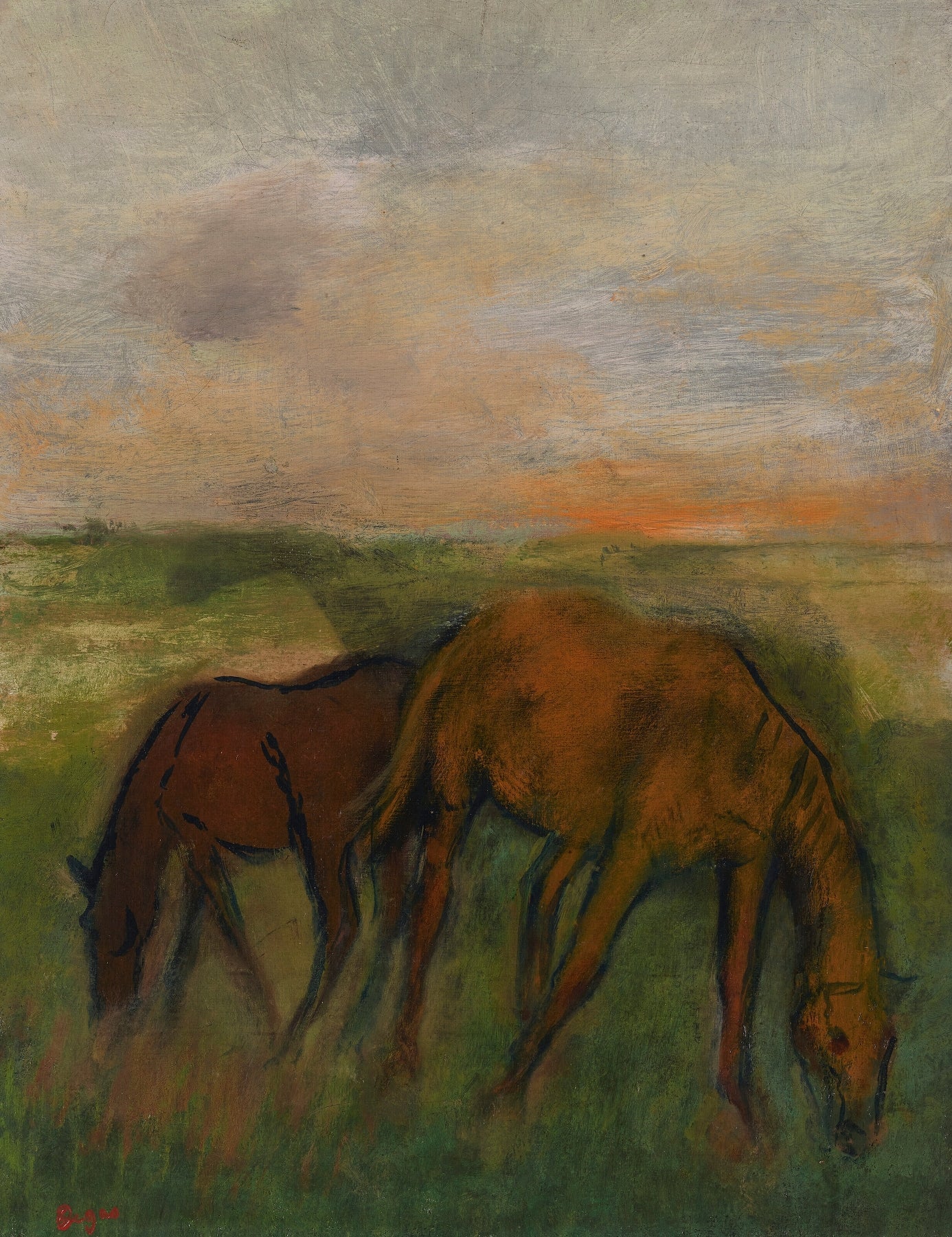
Edgar Degas is best known for his ballet dancers, his racetrack scenes, and his pastels of women bathing. But he also painted horses outside the context of sport — standing in fields, grazing, unobserved. Deux chevaux au pâturage (Two Horses at Pasture) dates to around 1871. Two chestnut horses stand close together on a green field, heads down, grazing. Their bodies are outlined in dark strokes and filled with warm orange-brown, overlapping slightly so the smaller horse is partially obscured behind the larger one. A thin band of orange light sits at the horizon, with a gray-lavender sky and a soft mauve cloud above. Degas's red signature is in the lower left corner. The composition is vertical, which is unusual for a landscape — the horses fill the lower two-thirds and the sky takes the rest.
See Also
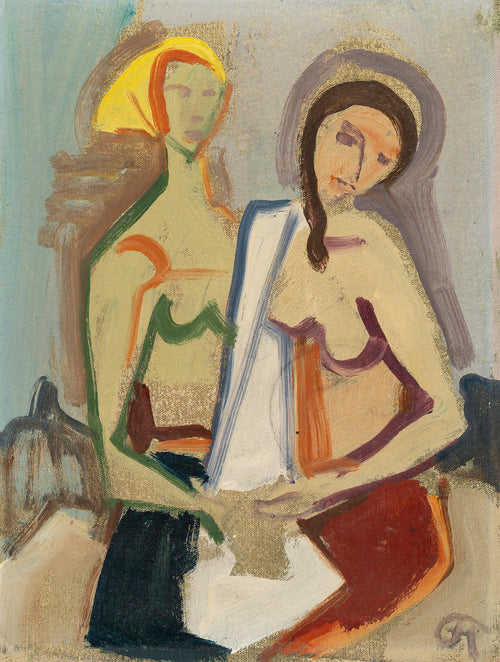
Study with Two Women
Karl Hofer
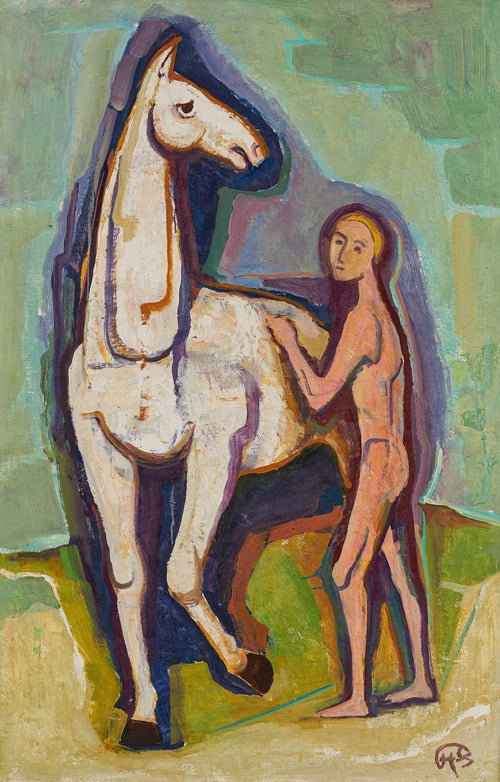
Boy with Horse
Karl Hofer
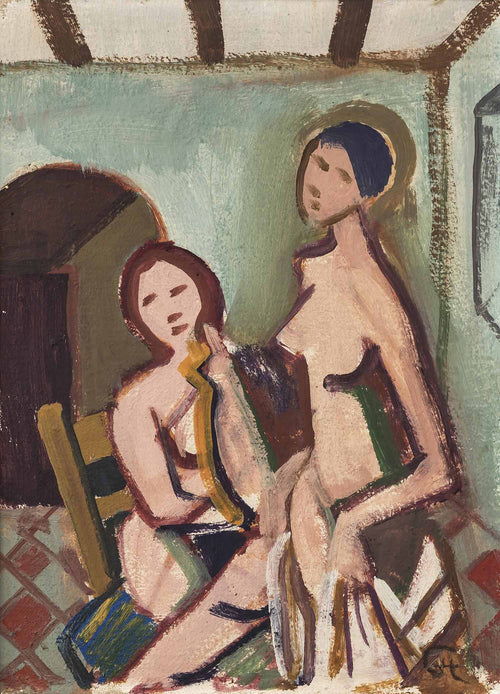
Two Female Nudes in the Room
Karl Hofer
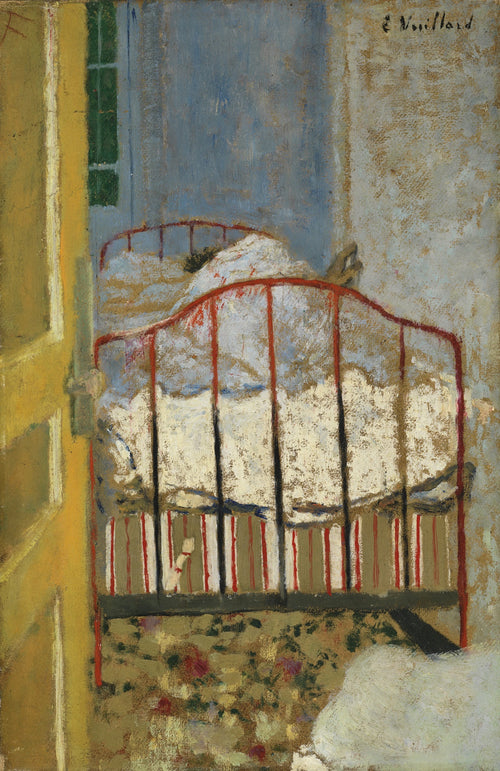
Intimité
Édouard Vuillard

Nu étendu sur un canapé
Édouard Vuillard

La Nourrice
Édouard Vuillard

The Seamstress
Édouard Vuillard

On the Sofa, The White Room
Édouard Vuillard

Jeune femme au chemisier rose
Louis Valtat

Herbs, Butterflies and a Serpent
Christiaen Striep

Nude in an Interior
Pierre Bonnard

A Reclining Nude before a Mirror
Roderic O'Conor

Laziness
Ramon Casas

Tired
Ramon Casas

Nude on a Blanket with a Red Floral Pattern
Édouard Vuillard

Kneeling Nude
Christian Rohlfs

Portrait of a Woman
Jan Ciągliński

Study of a Woman from Behind
Albert Küchler

Mademoiselle Suzanne Poirson
John Singer Sargent

Nude on a Tiger Skin
James Jebusa Shannon

Nude, leaning
Jan Rembowski

Autumn Woods
George Inness
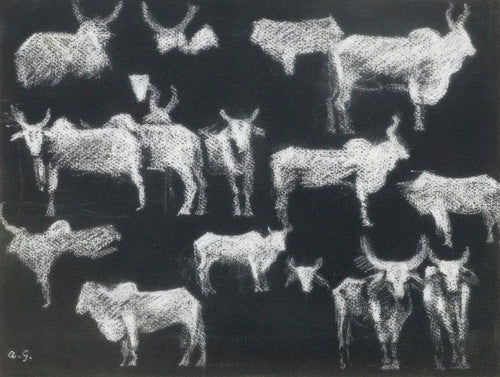
Zebus
Augusto Giacometti
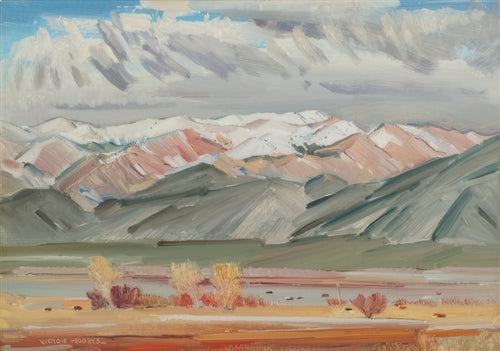
Meadow with Cattle
Victor Higgins
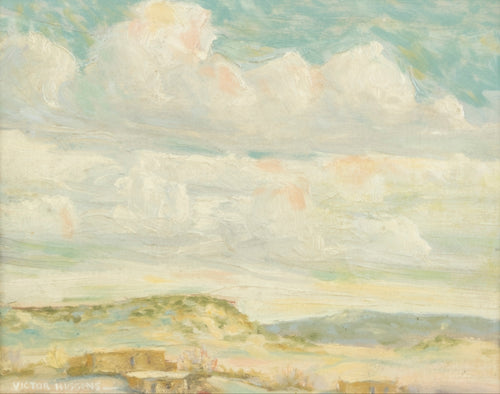
Atmospheric Desert Landscape
Victor Higgins
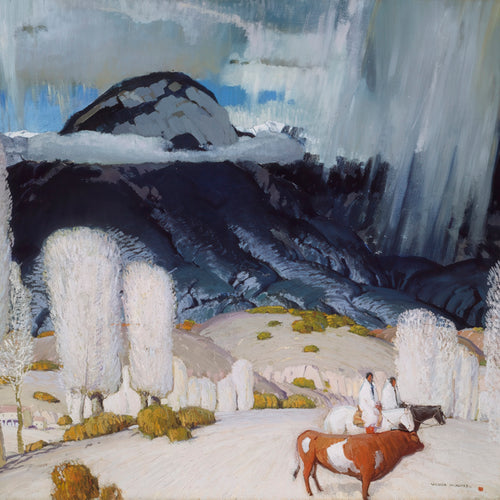
Spring Rains
Victor Higgins
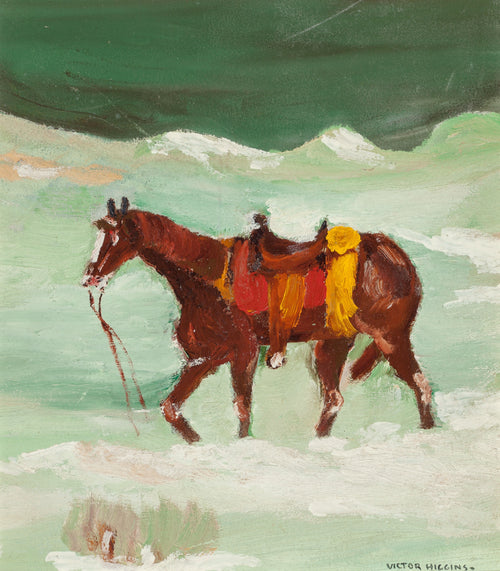
Saddled Horse
Victor Higgins
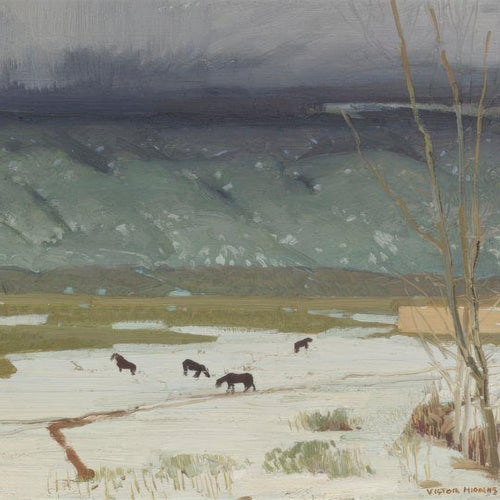
Winter Fields, Piñon Trees
Victor Higgins
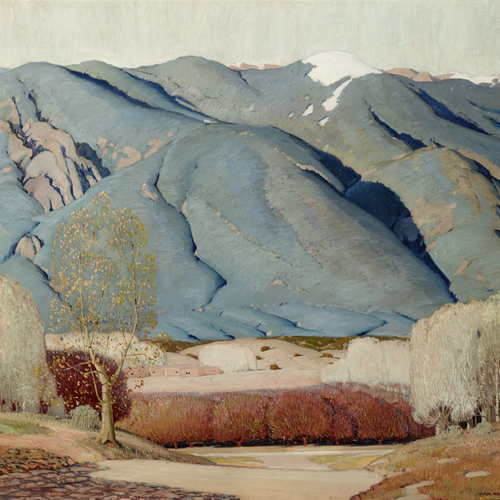
Taos, New Mexico
Victor Higgins
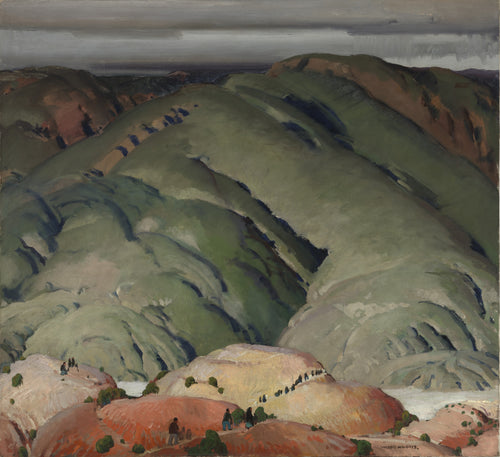
Mountain Forms #2
Victor Higgins
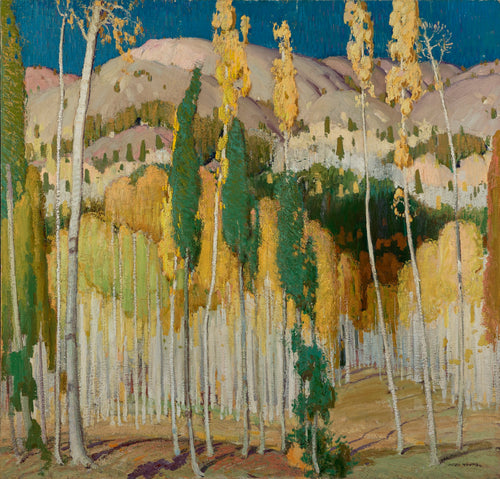
Aspen Trees at Twining
Victor Higgins
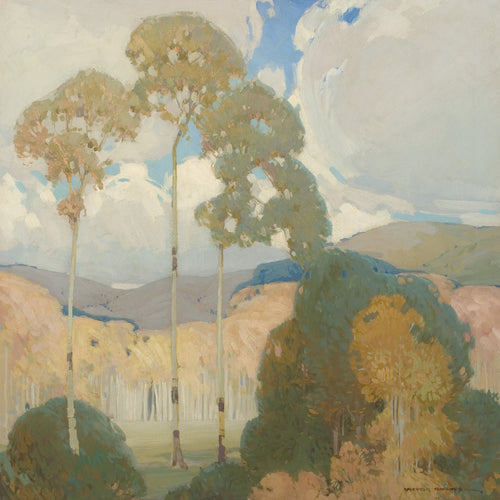
Aspens
Victor Higgins
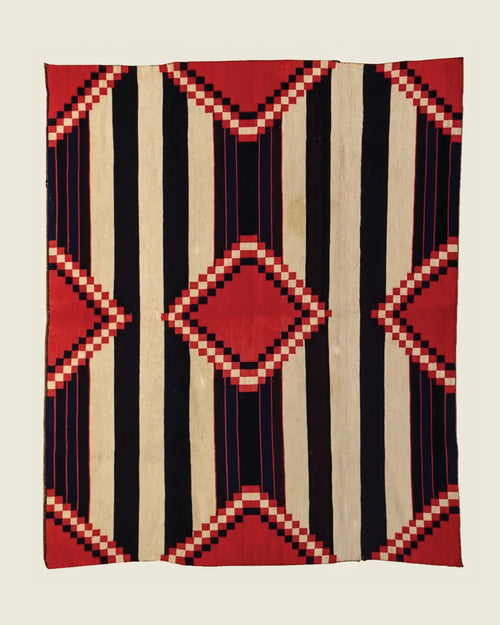
Chief's Blanket (c. 1880)
Navajo (Diné)

Babson and Ellery Houses
Fitz Henry Lane

Hudson Valley I
Arthur B. Davies

Twin Lakes, Colorado, Near Leadville
Arthur B. Davies

Sunday Morning Breakfast
Horace Pippin

Supper Time
Horace Pippin

Young Mother
William H. Johnson

Woman Ironing
William H. Johnson

Woman in Calico
William H. Johnson

Swing Low, Sweet Chariot
William H. Johnson

Still Life - Bottles, Jugs, Pitchers
William H. Johnson

Seated Female Nude
William H. Johnson

Portrait
William H. Johnson

Portrait of a Woman in a Rocking Chair
William H. Johnson

Little Girl in Orange
William H. Johnson

Li'l Sis
William H. Johnson

Peter Joe
William H. Johnson

Folk Family
William H. Johnson
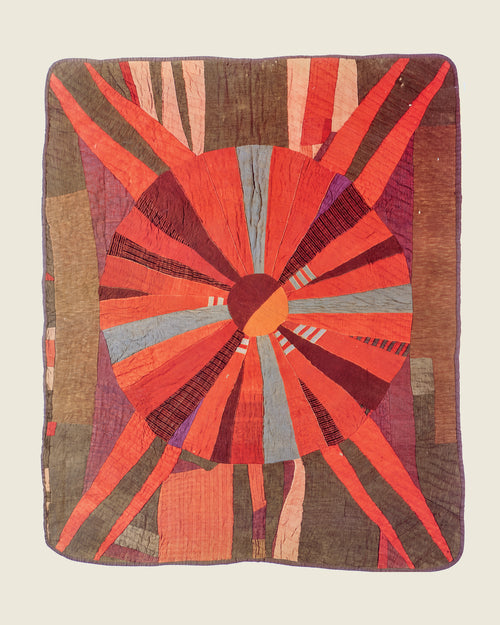
Kentucky Sun Quilt
Unknown Artist

Mountain Landscape
W. Herbert Dunton

Hudson Valley
Arthur B. Davies

Harvest Moon
George Inness

A Silver Morning
George Inness

Gathering for the Chief
LaVerne Nelson Black

Along the Old Trail
LaVerne Nelson Black

Apache at Watering Hole
LaVerne Nelson Black

Chatter over the New Heir
LaVerne Nelson Black

Cowboy te Paard
Isaac Israëls

Buffalo Bull, Grazing on the Prairie
George Catlin

Comanche War Party, Mounted on Wild Horses
George Catlin

Indians Hunting Buffalo
Charles M. Russell

Indianer zu Pferd
August Macke

Girl in Red Dress with Cat and Dog
Ammi Phillips


Our Process
Every piece in the archive goes through a deliberate process — part historian, part designer, part obsessive.
The thrill of the hunt
We pull from institutional archives, digitized collections, and the deep corners of the art world to find pieces that are both culturally and visually relevent, yet underexplored. We skip the hyper trendy pieces (looking at you, Matisse cutouts) in favor of niche work with a good story.
Context is everything
We dig into the provenance, history, and context around each piece — the artist, the period, the story that makes it worth living with. You don't have to be an art historian to appreciate knowing the who/what/why of a work of art, and it makes it that much more satisfying to live with every day.
Where a scan becomes a print
Institutional scans are often remarkable, but they're also imperfect: color casts from old photography, dust and scratches from the scanning bed, compression artifacts, uneven lighting across a large canvas. What we don't touch is the painting itself — the craquelure, the patina, the brushwork, the small marks of time that make a 200-year-old work look 200 years old. We restore the photograph of the painting, not the painting.
A careful eye
Color is adjusted with restraint. We reference historical materials when possible and avoid over-saturation or heavy-handed edits. The aim is a result that feels balanced, natural, and consistent with how the work was intended to be seen.
We don't do guesswork
Each piece is reviewed at print size to ensure clarity, contrast, and overall quality. Small issues become obvious at scale, so we take the time to catch them before anything is produced.


Common Questions
Giclée (zhee-clay) is a fine art printing process using archival pigment inks on museum-quality paper. The colors are richer, the detail is sharper, and the prints are rated to last 100+ years without fading. It's the same method used by galleries and museums for exhibition-quality reproductions.
All unframed prints are produced on heavyweight, acid-free fine art paper with a subtle matte finish.
Check the size guide on the Print + Frame guide page — it shows all available sizes to scale. General rule: go bigger than you think. For above a sofa, you want the art to be about two-thirds the width of the furniture below it.
Some cropping may occur depending on the aspect ratio of the original artwork and the size you select. Each size is adjusted differently—some preserve more of the original image, while others require a closer crop. We use our expertise to crop each piece in a way that maintains the integrity of the composition.
Our preview tool above gives a general sense of how the piece will look at different sizes, but it crops from the center and may not reflect the final composition exactly. If you’d like to confirm how a specific size will be cropped, feel free to reach out—we’re happy to help.
Our frames are solid oak or metal with a clean, modern profile. Oak frames are available in Natural Oak, Walnut, Black, and White. Metal frames are available in Gold, Silver, White, and Black. Matted options use an acid-free mat with a standard reveal. Every framed print arrives ready to hang. For frame dimensions and specs, please see our Print + Frame guide page.
Framed prints come with hanging hardware attached. Use two picture hooks for anything 18×24 or larger for the most secure hold. For unframed prints, we recommend taking them to a local frame shop — they'll cut a mat and mount it properly.
Orders are printed to order and typically ship within 3–5 business days. Delivery within the continental US usually takes an additional 3–4 business days.
We currently ship unframed prints internationally. Framed prints are only available within the US.
Reach out within 14 days and we'll take care of it. Please see our Shipping + Returns page for more information.
Because every print is made to order, we can't accept returns or exchanges. If you're unsure about sizing, check the size guide on the Framing page or get in touch — we're happy to help you decide before you buy.