
A stark, reductive study of the Swiss Alps. The composition is horizontally divided between a foreground of dry, pale yellow grass and a massive, looming mountain range that spans the upper half of the panel. The mountains are painted with thick, aggressive brushstrokes in shades of slate grey, muted purple, and dark blue, emphasizing their sheer physical mass and geological texture. In this piece, Biéler strips away extraneous detail, using raw, unrefined impasto to document the imposing, rugged environment of the Valais region.

See Also

The Yellow Bush
Clarice Beckett

Pale Face with Red Hair
Jules Schmalzigaug

Harmonie lunaire
Alphonse Osbert

Study of Mountain Flowers
Ladislav Mednyánszky

Rue Terre Neuve
Gwen John
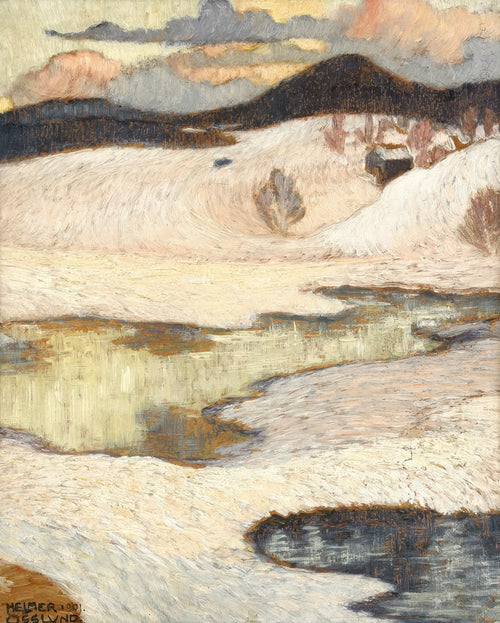
Norrland Winter Landscape
Helmer Osslund
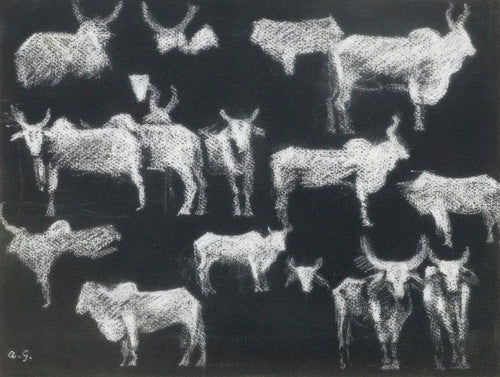
Zebus
Augusto Giacometti
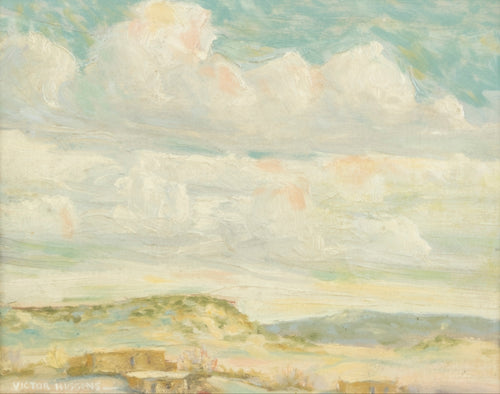
Atmospheric Desert Landscape
Victor Higgins
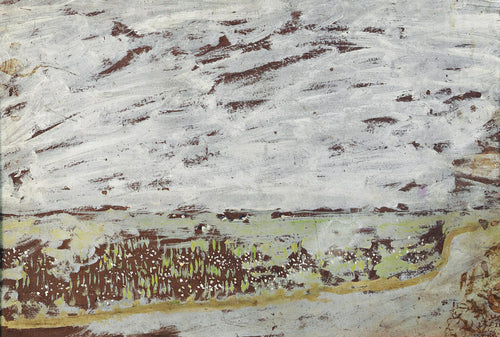
Les bords de la Tocques à Pont-l'Évêque
Édouard Vuillard
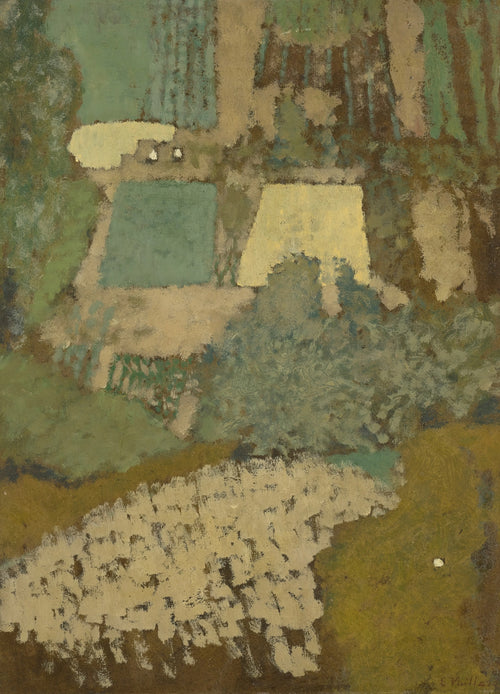
Vue plongeante sur la colline
Édouard Vuillard
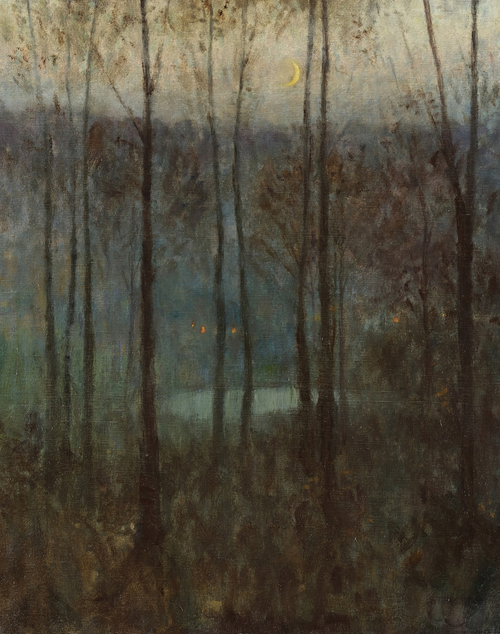
Nocturne, Trees
Edward Steichen
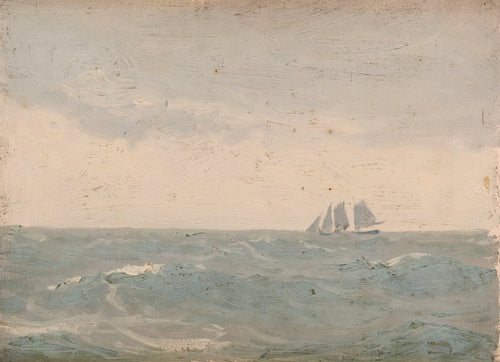
Seascape
John Fraser
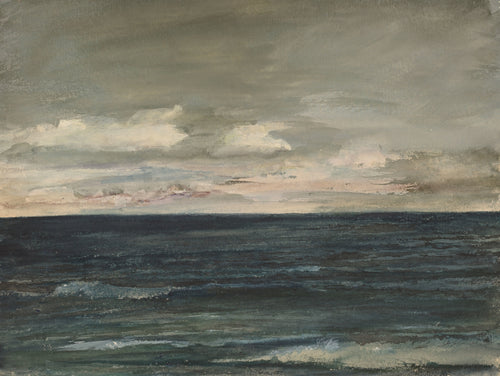
Lesson Study on Jersey Coast
John La Farge
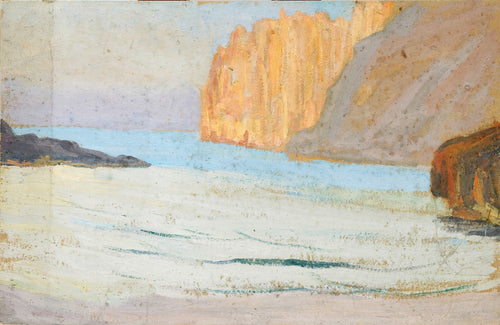
Bay at the Sea with Rocks
Ernst Schiess

Untitled (Landscape)
André Derain

L'oiseau (paon)
André Derain

Nénuphars
Paul Ranson

Le chemin à la campagne en Bretagne
Édouard Vuillard

The Petunia
Édouard Vuillard

Statuaire
Édouard Vuillard

Nu au fauteuil
Édouard Vuillard

La plage violette
Édouard Vuillard

The Beach at Saint-Jacut
Édouard Vuillard

Pine Forest in Snow
Kolomon Moser

Tranquility
Clarice Beckett

Sherbrook
Clarice Beckett

Landscape with Birches
Paula Modersohn-Becker

Riiul toas
Karin Luts

White Farm
Gustave De Smet

The Kiss
Jankel Adler

A Blue Jay Flew Up in a Tree
Arthur Dove

Form no. 11, red
Onchi Kōshirō

Sailing Boats
Mikalojus Čiurlionis

Laziness
Ramon Casas

Ohne Titel (Untitled)
Wassily Kandinsky

11 Tableaux et 7 Poèmes
Wassily Kandinsky

Formen farbig (Fliegende Formen)
Willi Baumeister

Tori with Blue Dot
Willi Baumeister

Drumbeat
Willi Baumeister

Weißes Zeichen auf Hellgrün
Willi Baumeister

Untitled VI
Henry Lyman Saÿen

Landscape with Cows
Arthur B. Davies

In the Manner of a Leather Tapestry
Paul Klee

Étude de forêt
Berthe Morisot

Forêt de Compiègne
Berthe Morisot

Sous-Bois
Berthe Morisot

Mondaufgang
Hans am Ende

Maryino — Birch Trees
Jan Ciągliński

Kevad
Lola Liivat

Arbres japonisants
Paul Sérusier
The Yellow Bush
Clarice Beckett

A Silver Morning
George Inness
Pale Face with Red Hair
Jules Schmalzigaug

Eleven Nudes
Arthur B. Davies
Study of Mountain Flowers
Ladislav Mednyánszky

An der Parkmauer
Emilie Mediz-Pelikan

Village Yard
Zolo Palugyay

Tatry
Zolo Palugyay

Tatra Landscape
Zolo Palugyay

Edge of the Forest in Autumn
Zolo Palugyay

Cottage
Zolo Palugyay

Design for Embroidered Motifs (Fabrique de St. Ruf)
Unknown Artist

The Twilight Moon
Isaac Levitan

Motif from Paris
Olga Boznańska
Rue Terre Neuve
Gwen John

Evening Landscape
Ladislav Mednyánszky

Edge of the Forest in the Moonlight
Ladislav Mednyánszky

Winter Sun
Ladislav Mednyánszky

Thaw
Ladislav Mednyánszky

Autumn at the Edge of a City
Ladislav Mednyánszky
Norrland Winter Landscape
Helmer Osslund
Forêt de Compiègne
Berthe Morisot
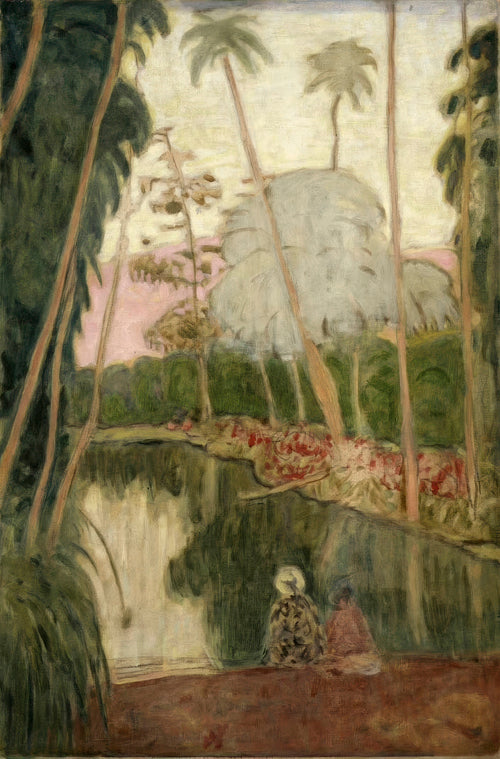
The Pond, West Indies
James Wilson Morrice
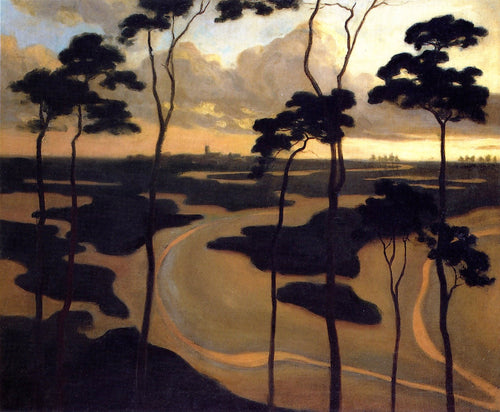
Blythburgh, The Estuary
Roger Fry
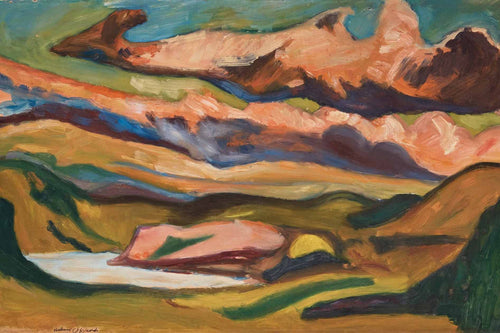
The Ångerman River at Rödskägget
Helmer Osslund
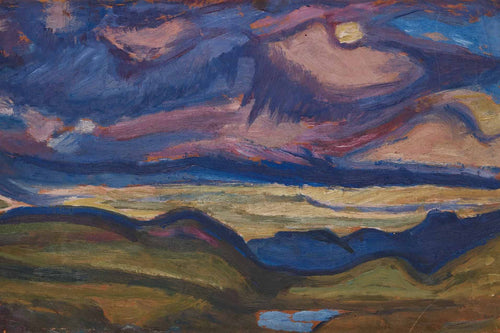
The Ångerman River in Moonlight
Helmer Osslund
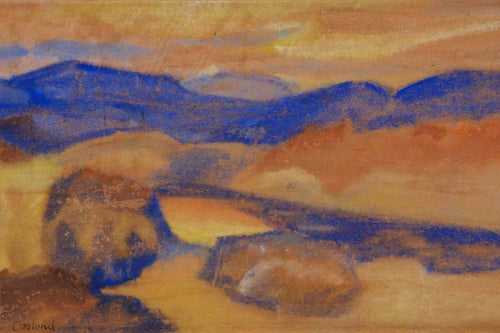
The Ångerman River
Helmer Osslund
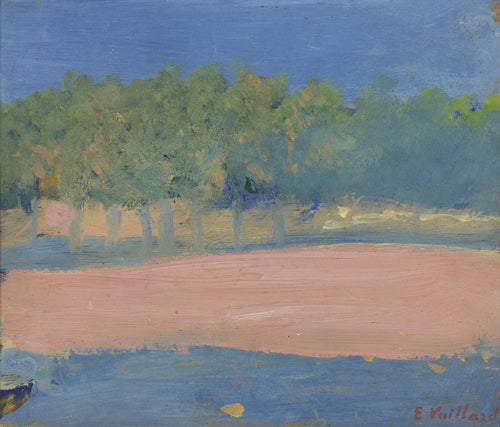
Paysage
Édouard Vuillard
Vue plongeante sur la colline
Édouard Vuillard
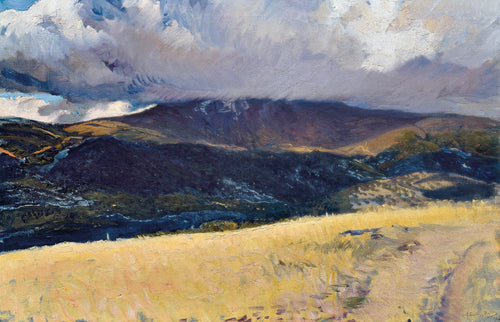
Tormenta sobre Peñalara, Segovia
Joaquín Sorolla
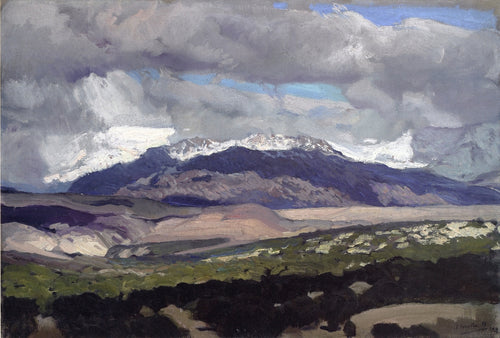
Vista de La Pedriza desde El Pardo
Joaquín Sorolla
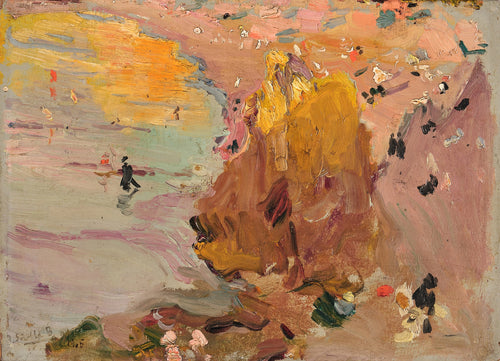
Beach of Biarritz
Joaquín Sorolla
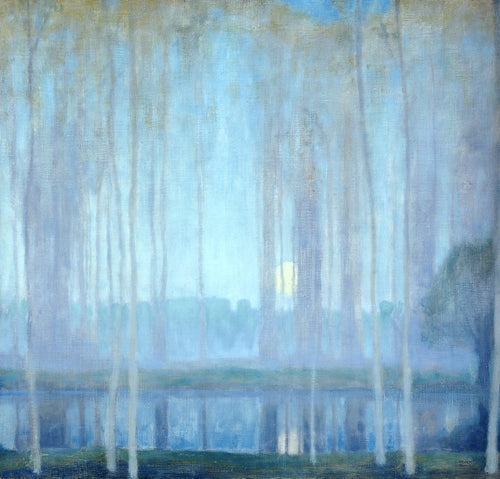
Yellow Moon
Edward Steichen
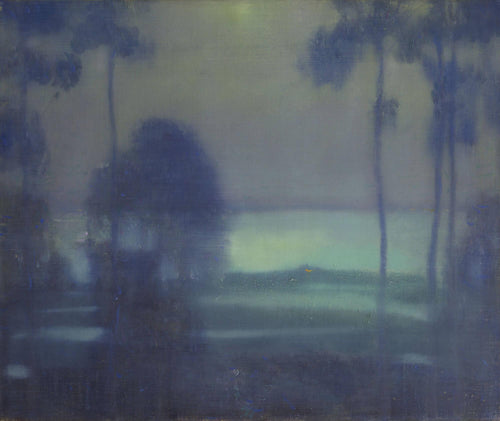
Nocturne, Trees
Edward Steichen
Across the Salt Marshes, Huntington
Edward Steichen
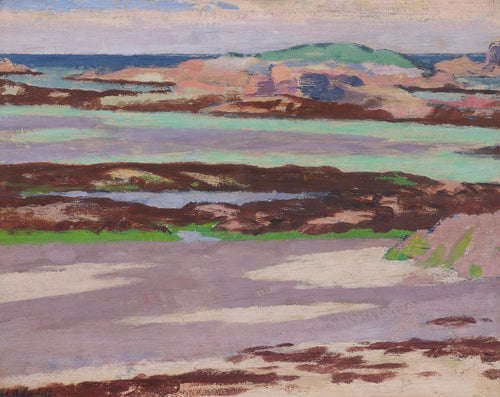
The Machair Bay, Iona
Francis Cadell
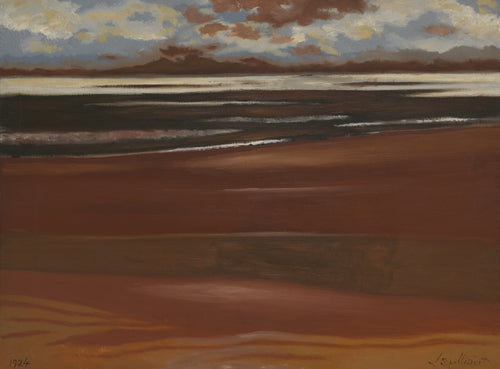
Marine (1924)
Léon Spilliaert
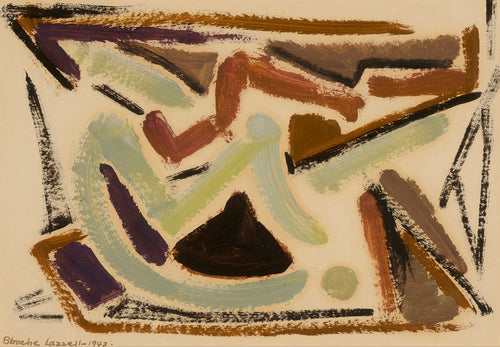
Provincetown Dunes
Blanche Lazzell
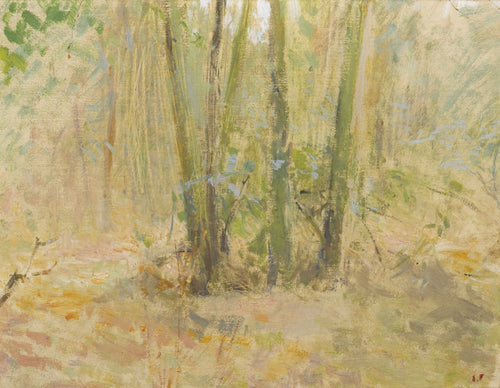
Arbres dans la forêt
Édouard Vuillard
Untitled (Landscape)
André Derain

Le Parc
André Derain
Nénuphars
Paul Ranson

Untitled, 1936
Arthur Dove

Through a Frosty Moon
Arthur Dove

Snow on Ice
Arthur Dove

The Sierra De Guadarrama
Joaquín Sorolla

Sunset
Emilie Mediz-Pelikan
The Beach at Saint-Jacut
Édouard Vuillard

Green Hills and the Apennines
Arthur B. Davies


Our Process
Every piece in the archive goes through a deliberate process — part historian, part designer, part obsessive.
The thrill of the hunt
We pull from institutional archives, digitized collections, and the deep corners of the art world to find pieces that are both culturally and visually relevent, yet underexplored. We skip the hyper trendy pieces (looking at you, Matisse cutouts) in favor of niche work with a good story.
Context is everything
We dig into the provenance, history, and context around each piece — the artist, the period, the story that makes it worth living with. You don't have to be an art historian to appreciate knowing the who/what/why of a work of art, and it makes it that much more satisfying to live with every day.
Where a scan becomes a print
Institutional scans are often remarkable, but they're also imperfect: color casts from old photography, dust and scratches from the scanning bed, compression artifacts, uneven lighting across a large canvas. What we don't touch is the painting itself — the craquelure, the patina, the brushwork, the small marks of time that make a 200-year-old work look 200 years old. We restore the photograph of the painting, not the painting.
A careful eye
Color is adjusted with restraint. We reference historical materials when possible and avoid over-saturation or heavy-handed edits. The aim is a result that feels balanced, natural, and consistent with how the work was intended to be seen.
We don't do guesswork
Each piece is reviewed at print size to ensure clarity, contrast, and overall quality. Small issues become obvious at scale, so we take the time to catch them before anything is produced.


Common Questions
Giclée (zhee-clay) is a fine art printing process using archival pigment inks on museum-quality paper. The colors are richer, the detail is sharper, and the prints are rated to last 100+ years without fading. It's the same method used by galleries and museums for exhibition-quality reproductions.
All unframed prints are produced on heavyweight, acid-free fine art paper with a subtle matte finish.
Check the size guide on the Print + Frame guide page — it shows all available sizes to scale. General rule: go bigger than you think. For above a sofa, you want the art to be about two-thirds the width of the furniture below it.
Some cropping may occur depending on the aspect ratio of the original artwork and the size you select. Each size is adjusted differently—some preserve more of the original image, while others require a closer crop. We use our expertise to crop each piece in a way that maintains the integrity of the composition.
Our preview tool above gives a general sense of how the piece will look at different sizes, but it crops from the center and may not reflect the final composition exactly. If you’d like to confirm how a specific size will be cropped, feel free to reach out—we’re happy to help.
Our frames are solid oak or metal with a clean, modern profile. Oak frames are available in Natural Oak, Walnut, Black, and White. Metal frames are available in Gold, Silver, White, and Black. Matted options use an acid-free mat with a standard reveal. Every framed print arrives ready to hang. For frame dimensions and specs, please see our Print + Frame guide page.
Framed prints come with hanging hardware attached. Use two picture hooks for anything 18×24 or larger for the most secure hold. For unframed prints, we recommend taking them to a local frame shop — they'll cut a mat and mount it properly.
Orders are printed to order and typically ship within 3–5 business days. Delivery within the continental US usually takes an additional 3–4 business days.
We currently ship unframed prints internationally. Framed prints are only available within the US.
Reach out within 14 days and we'll take care of it. Please see our Shipping + Returns page for more information.
Because every print is made to order, we can't accept returns or exchanges. If you're unsure about sizing, check the size guide on the Framing page or get in touch — we're happy to help you decide before you buy.