
A fluid, highly atmospheric sketch of a river valley. A pale, winding river cuts through a dense midground of dark, heavily applied evergreens. The surrounding mountains rise on either side, rendered in thin, transparent washes of blue and grey that expose the texture of the paper beneath. Above, the sky is painted in broad, horizontal strokes of pale yellow and orange, indicating dawn or dusk. Dated 1942, this late work demonstrates Biéler’s technical control of the watercolor medium, relying on the contrast between translucent washes and opaque pigments to define the Alpine geography.

See Also

Landscape at Zambotte, Savièse
Ernest Biéler

Autumn Woods
George Inness
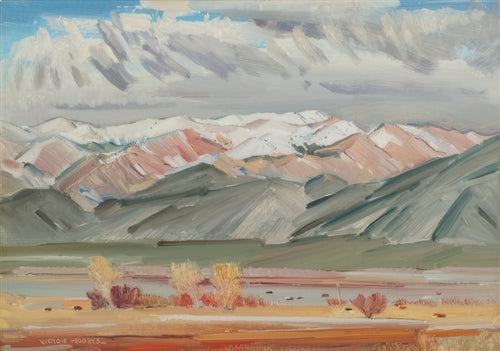
Meadow with Cattle
Victor Higgins
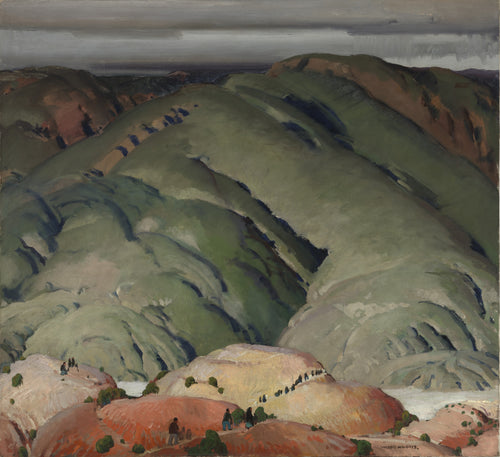
Mountain Forms #2
Victor Higgins
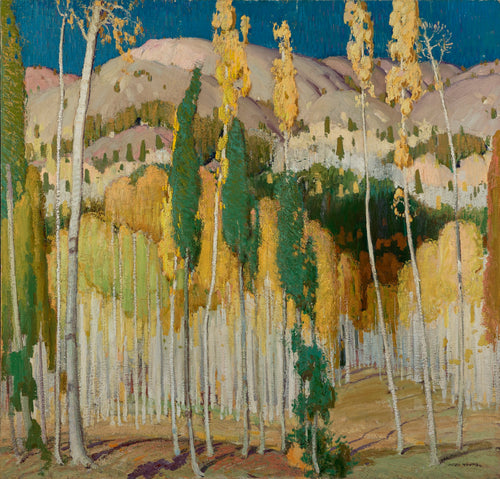
Aspen Trees at Twining
Victor Higgins
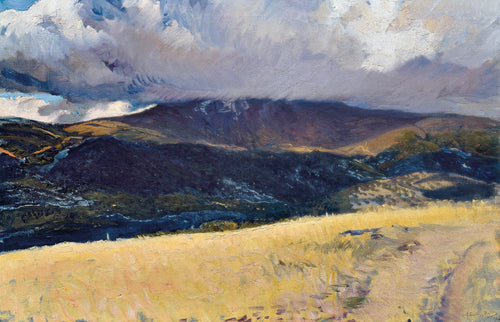
Tormenta sobre Peñalara, Segovia
Joaquín Sorolla
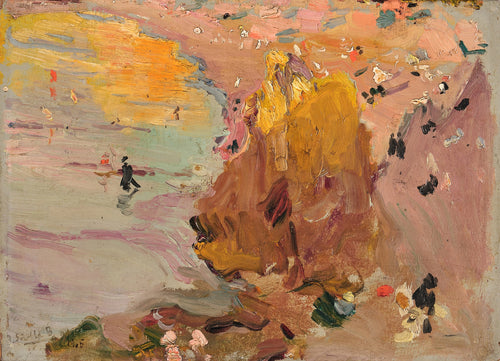
Beach of Biarritz
Joaquín Sorolla
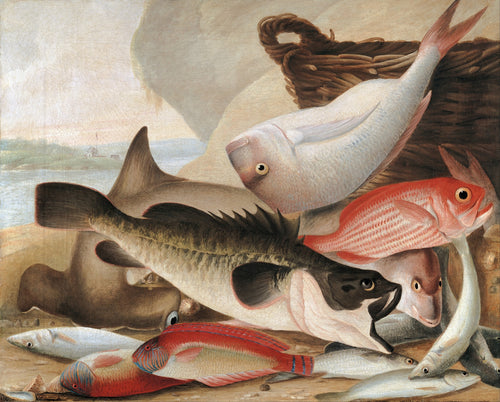
Fish Catch and Dawes Point, Sydney Harbour
John William Lewin
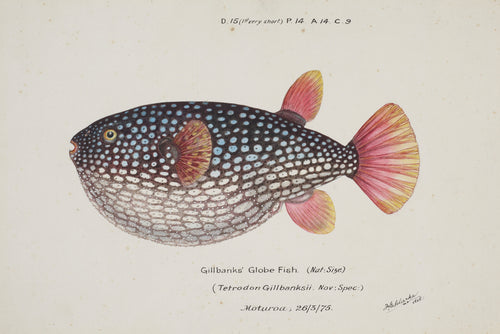
Arothron gillbanksii (Gillbanks' Globe Fish)
Frank H. Clarke
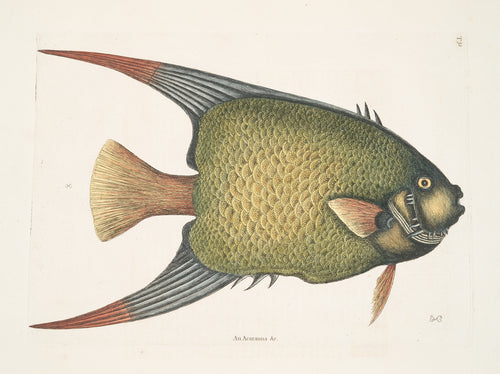
An Acarauna
Mark Catesby
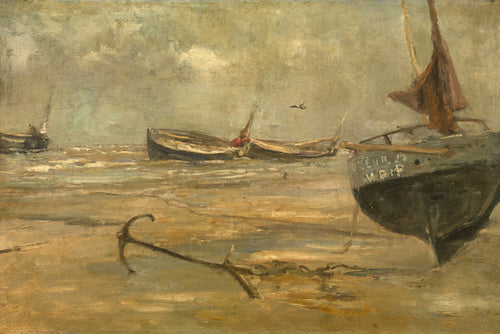
After the Catching of Fish
Louis Artan
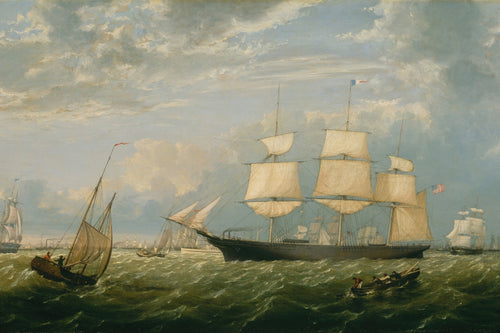
The Golden State Entering New York Harbor
Fitz Henry Lane

Babson and Ellery Houses
Fitz Henry Lane

La pluie sur la route
Paul Sérusier

Concile féerique II
Paul Sérusier

Concile féerique I
Paul Sérusier

Sunday Stroll (Yellow Dresses) II
Paul Sérusier

Sunday Stroll (Yellow Dresses) I
Paul Sérusier

The Little Cottage
George Clausen

Pianist and Checker Players
Henri Matisse

Sunday Morning Breakfast
Horace Pippin

Supper Time
Horace Pippin

Young Mother
William H. Johnson

Woman Ironing
William H. Johnson

Woman in Calico
William H. Johnson

Swing Low, Sweet Chariot
William H. Johnson

Still Life - Bottles, Jugs, Pitchers
William H. Johnson

Seated Female Nude
William H. Johnson

Portrait
William H. Johnson

Portrait of a Woman in a Rocking Chair
William H. Johnson

Little Girl in Orange
William H. Johnson

Li'l Sis
William H. Johnson

Peter Joe
William H. Johnson

Folk Family
William H. Johnson

Tapestry with the Annunciation
Unknown Artist

Village Church
Eugène Laermans
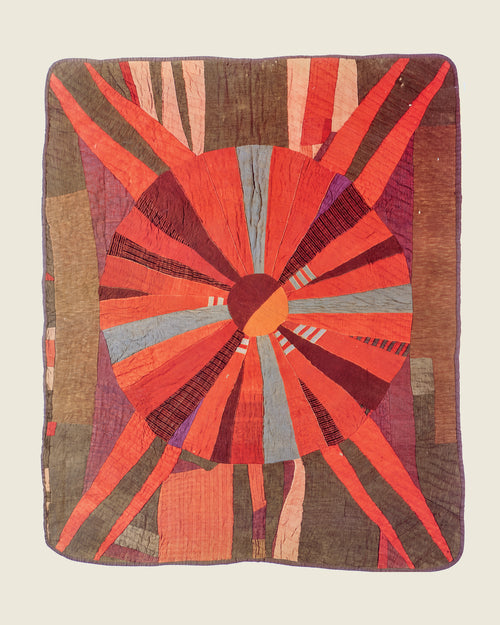
Kentucky Sun Quilt
Unknown Artist

Afternoon, Ronda, Spain
James Dickson Innes

Hudson Valley
Arthur B. Davies

Harvest Moon
George Inness

Gathering for the Chief
LaVerne Nelson Black

Along the Old Trail
LaVerne Nelson Black

Apache at Watering Hole
LaVerne Nelson Black

Deux chats couchés sur un canapé
Théophile Alexandre Steinlen

L'Hiver: Chat sur un coussin
Théophile Alexandre Steinlen

The Last Rays
Jean-Charles Cazin

After the Harvest
Jean-Charles Cazin

Moonrise
Jean-Charles Cazin

Moonrise
Henri-Joseph Harpignies

Arbres japonisants
Paul Sérusier

The Yellow Bush
Clarice Beckett

A Silver Morning
George Inness

Pale Face with Red Hair
Jules Schmalzigaug

Eleven Nudes
Arthur B. Davies

Study of Mountain Flowers
Ladislav Mednyánszky

An der Parkmauer
Emilie Mediz-Pelikan

Village Yard
Zolo Palugyay

Tatry
Zolo Palugyay

Tatra Landscape
Zolo Palugyay

Edge of the Forest in Autumn
Zolo Palugyay

Cottage
Zolo Palugyay

Design for Embroidered Motifs (Fabrique de St. Ruf)
Unknown Artist

The Twilight Moon
Isaac Levitan

Motif from Paris
Olga Boznańska

Rue Terre Neuve
Gwen John

Evening Landscape
Ladislav Mednyánszky

Edge of the Forest in the Moonlight
Ladislav Mednyánszky

Winter Sun
Ladislav Mednyánszky

Thaw
Ladislav Mednyánszky

Autumn at the Edge of a City
Ladislav Mednyánszky
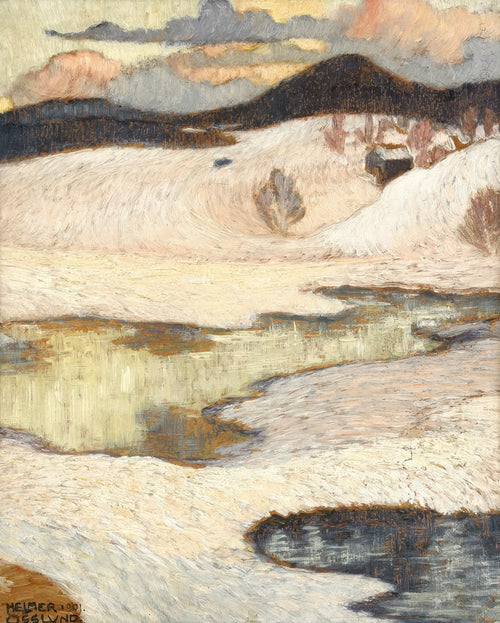
Norrland Winter Landscape
Helmer Osslund

Forêt de Compiègne
Berthe Morisot
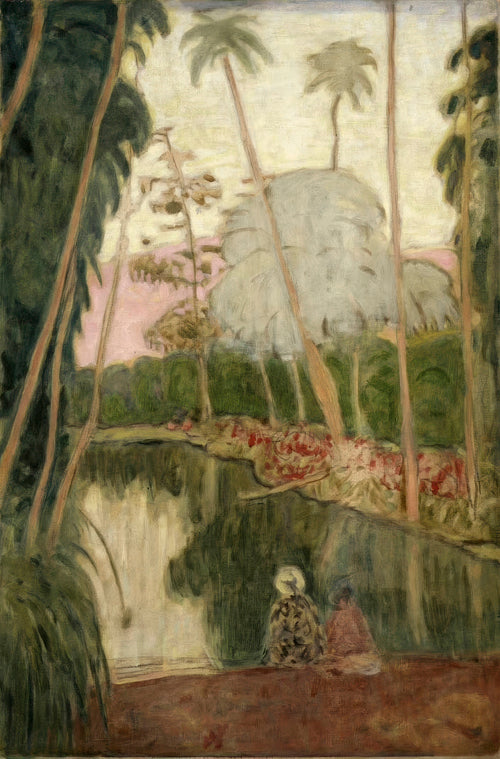
The Pond, West Indies
James Wilson Morrice
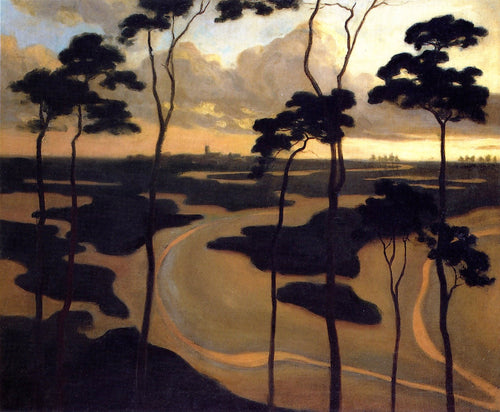
Blythburgh, The Estuary
Roger Fry
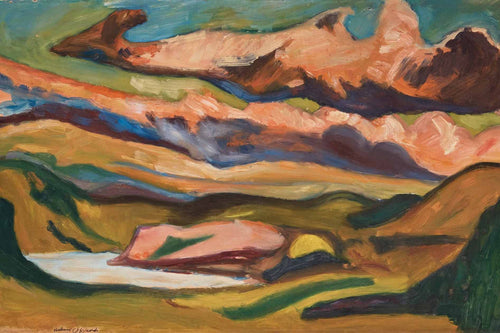
The Ångerman River at Rödskägget
Helmer Osslund
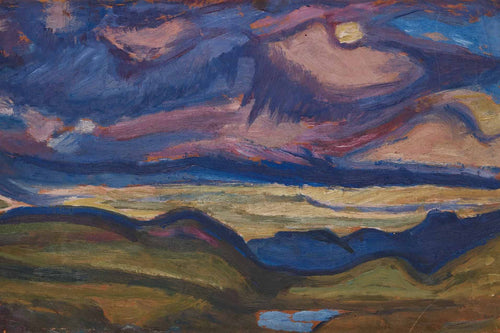
The Ångerman River in Moonlight
Helmer Osslund
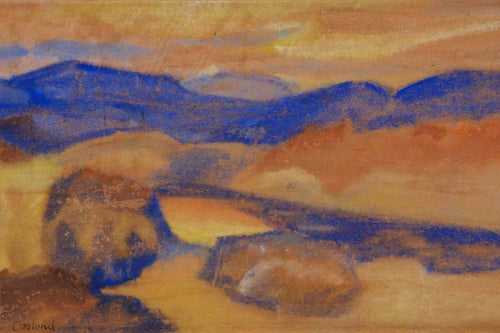
The Ångerman River
Helmer Osslund
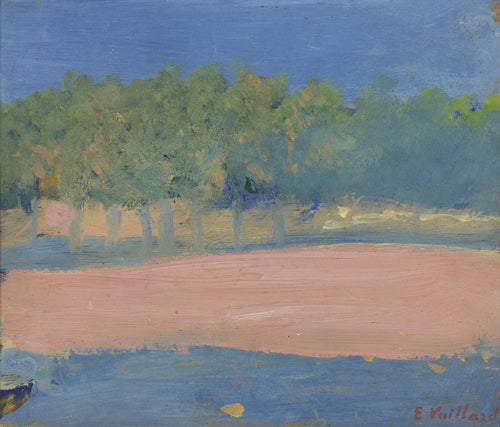
Paysage
Édouard Vuillard
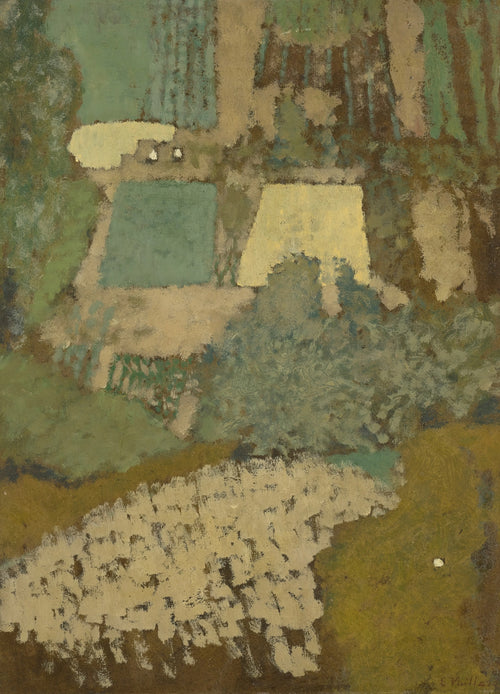
Vue plongeante sur la colline
Édouard Vuillard
Tormenta sobre Peñalara, Segovia
Joaquín Sorolla
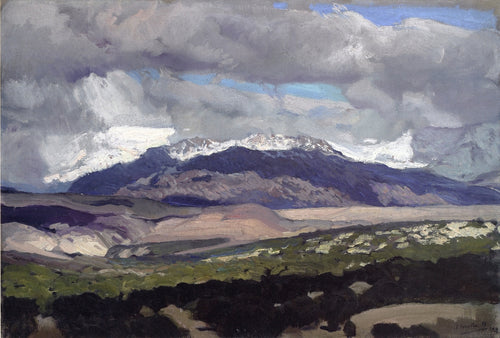
Vista de La Pedriza desde El Pardo
Joaquín Sorolla
Beach of Biarritz
Joaquín Sorolla
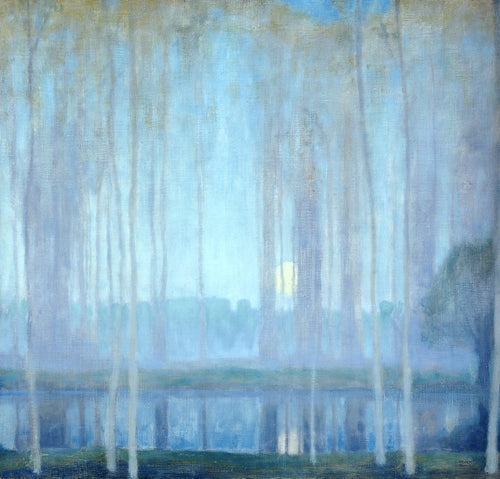
Yellow Moon
Edward Steichen
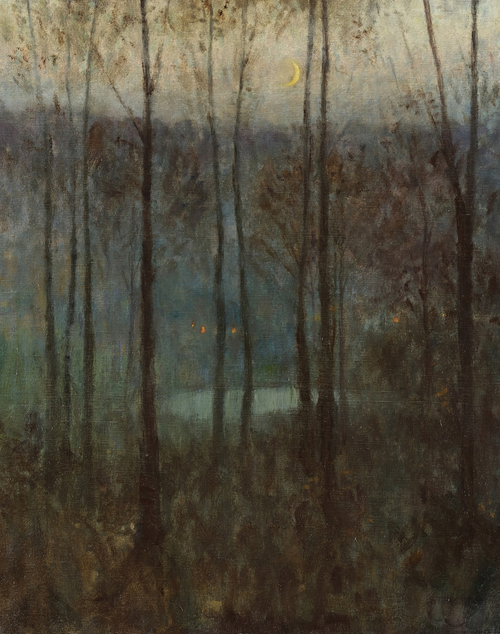
Nocturne, Trees
Edward Steichen
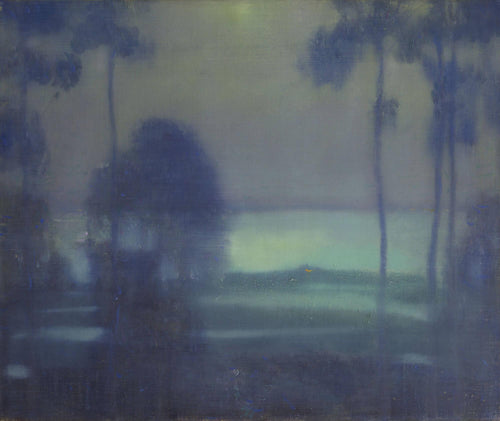
Across the Salt Marshes, Huntington
Edward Steichen
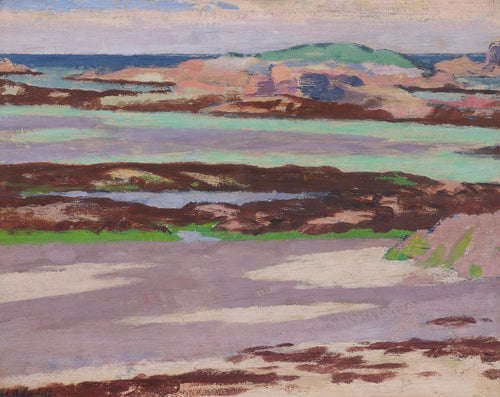
The Machair Bay, Iona
Francis Cadell
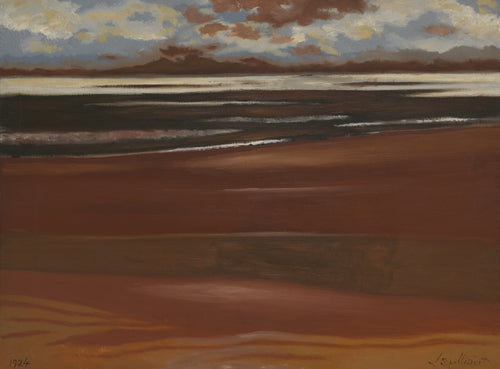
Marine (1924)
Léon Spilliaert
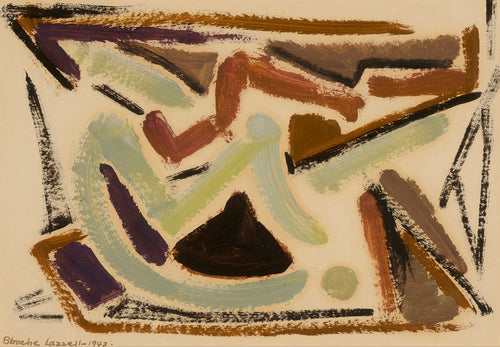
Provincetown Dunes
Blanche Lazzell
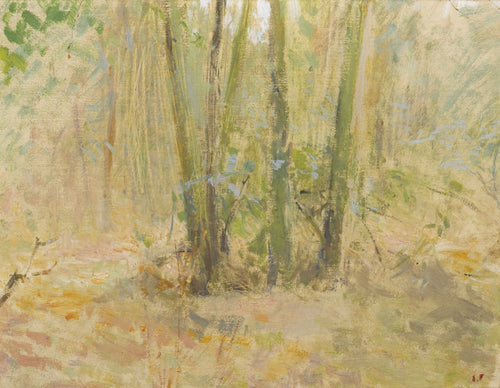
Arbres dans la forêt
Édouard Vuillard

Untitled (Landscape)
André Derain

Le Parc
André Derain

Nénuphars
Paul Ranson

Untitled, 1936
Arthur Dove

Through a Frosty Moon
Arthur Dove

Snow on Ice
Arthur Dove

The Sierra De Guadarrama
Joaquín Sorolla

Sunset
Emilie Mediz-Pelikan

The Beach at Saint-Jacut
Édouard Vuillard

Green Hills and the Apennines
Arthur B. Davies


Our Process
Every piece in the archive goes through a deliberate process — part historian, part designer, part obsessive.
The thrill of the hunt
We pull from institutional archives, digitized collections, and the deep corners of the art world to find pieces that are both culturally and visually relevent, yet underexplored. We skip the hyper trendy pieces (looking at you, Matisse cutouts) in favor of niche work with a good story.
Context is everything
We dig into the provenance, history, and context around each piece — the artist, the period, the story that makes it worth living with. You don't have to be an art historian to appreciate knowing the who/what/why of a work of art, and it makes it that much more satisfying to live with every day.
Where a scan becomes a print
Institutional scans are often remarkable, but they're also imperfect: color casts from old photography, dust and scratches from the scanning bed, compression artifacts, uneven lighting across a large canvas. What we don't touch is the painting itself — the craquelure, the patina, the brushwork, the small marks of time that make a 200-year-old work look 200 years old. We restore the photograph of the painting, not the painting.
A careful eye
Color is adjusted with restraint. We reference historical materials when possible and avoid over-saturation or heavy-handed edits. The aim is a result that feels balanced, natural, and consistent with how the work was intended to be seen.
We don't do guesswork
Each piece is reviewed at print size to ensure clarity, contrast, and overall quality. Small issues become obvious at scale, so we take the time to catch them before anything is produced.


Common Questions
Giclée (zhee-clay) is a fine art printing process using archival pigment inks on museum-quality paper. The colors are richer, the detail is sharper, and the prints are rated to last 100+ years without fading. It's the same method used by galleries and museums for exhibition-quality reproductions.
All unframed prints are produced on heavyweight, acid-free fine art paper with a subtle matte finish.
Check the size guide on the Print + Frame guide page — it shows all available sizes to scale. General rule: go bigger than you think. For above a sofa, you want the art to be about two-thirds the width of the furniture below it.
Some cropping may occur depending on the aspect ratio of the original artwork and the size you select. Each size is adjusted differently—some preserve more of the original image, while others require a closer crop. We use our expertise to crop each piece in a way that maintains the integrity of the composition.
Our preview tool above gives a general sense of how the piece will look at different sizes, but it crops from the center and may not reflect the final composition exactly. If you’d like to confirm how a specific size will be cropped, feel free to reach out—we’re happy to help.
Our frames are solid oak or metal with a clean, modern profile. Oak frames are available in Natural Oak, Walnut, Black, and White. Metal frames are available in Gold, Silver, White, and Black. Matted options use an acid-free mat with a standard reveal. Every framed print arrives ready to hang. For frame dimensions and specs, please see our Print + Frame guide page.
Framed prints come with hanging hardware attached. Use two picture hooks for anything 18×24 or larger for the most secure hold. For unframed prints, we recommend taking them to a local frame shop — they'll cut a mat and mount it properly.
Orders are printed to order and typically ship within 3–5 business days. Delivery within the continental US usually takes an additional 3–4 business days.
We currently ship unframed prints internationally. Framed prints are only available within the US.
Reach out within 14 days and we'll take care of it. Please see our Shipping + Returns page for more information.
Because every print is made to order, we can't accept returns or exchanges. If you're unsure about sizing, check the size guide on the Framing page or get in touch — we're happy to help you decide before you buy.